

-2025-07-11-06-46-49.webp)

Last updated on 2025-09-15
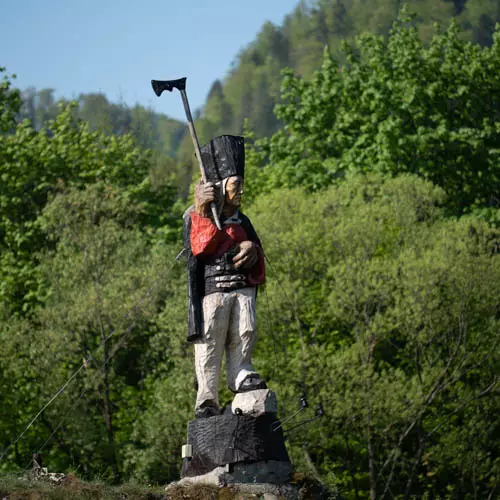
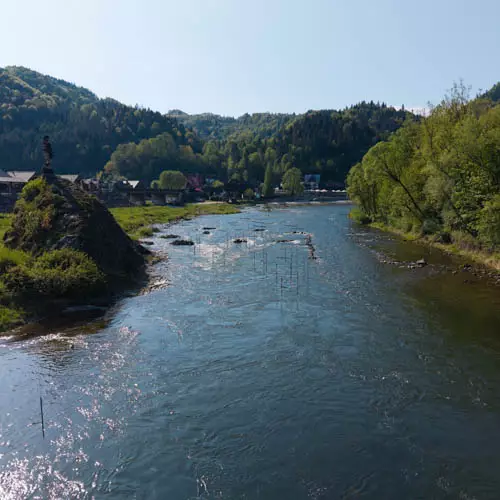
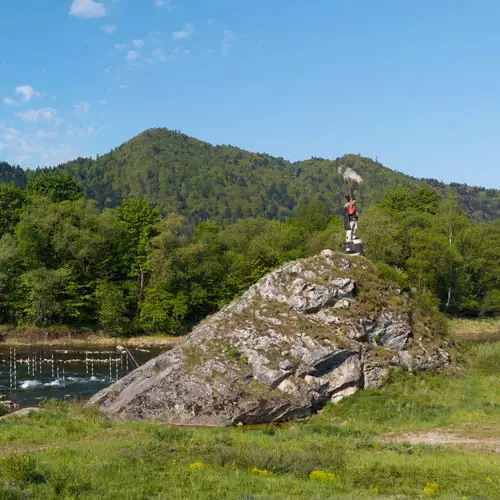
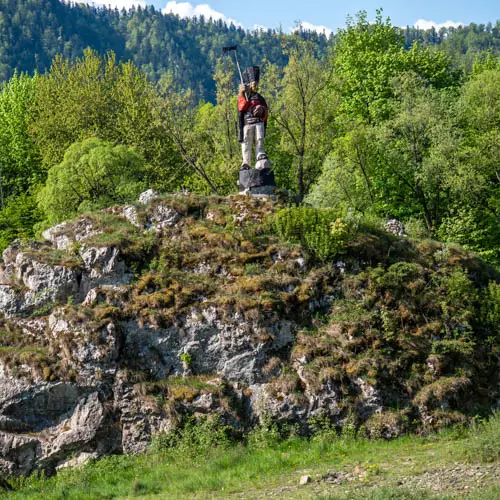
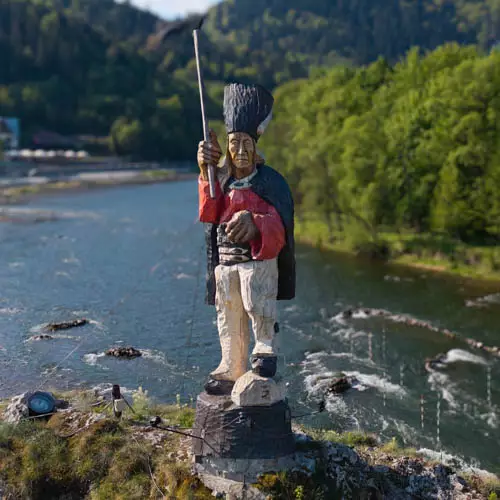
Every visitor entering Szczawnica encounters a unique guardian – a wooden sculpture of a highlander standing proudly on the Kotuńka rock in the middle of the rushing Dunajec River.
Kotuńka is a 9.5‑metre limestone rock composed of erosion-resistant Czorsztyn limestone. The Dunajec River, washing away the less durable surrounding layers, exposed this hard limestone formation. The summit of Kotuńka lies at an altitude of 438 m above sea level, and the river flow pattern around the rock is perfectly suited for white‑water kayaking – as if created by nature. This is precisely why a slalom course for white‑water kayaking was established here.
The origin of the name remains unexplained, although – like many Pieniny rocks – Kotuńka is enveloped in legend. According to the tale, the Devil carried a huge boulder which he intended to drop on the Pieniny Castle, where Saint Kinga had taken refuge from the Tatars. When he was near his target, a rooster crowed – dawn had broken. Frightened by the first sign of day, the Devil dropped the boulder. The rock fell into the Dunajec and has remained there forever, a reminder of his failed plan.
The story of the highlander sculpture on Kotuńka dates back to 1875, when the first wooden figure was placed to welcome guests arriving at the spa. That original statue endured for 37 years until 1912. For the next decades the rock remained empty, until in 1997 the tradition was revived with a new highlander sculpture – one of modern Szczawnica’s symbols.
The author of the two modern sculptures was Józef Madeja – a native of Szczawnica, a surveyor by trade and sculptor by passion, who died on April 1, 2023. His first figure from 1997 was struck by lightning and destroyed in July 2005. Madeja carved another, unveiled on May 28, 2007, thanks to the support of the heirs of Count Adam Stadnicki. This statue survived nine years before gradually deteriorating due to weather exposure.
In 2016, Szczawnica received its third and monumental sculpture. It was crafted by three artists from Podhale: Dawid Wędziarz from Raba Wyżna, Marek Czekalski from Rabka-Zdrój, and Marcin Lichosyt from Zubrzyca Dolna. The statue was unveiled on October 30, 2016, the end of the rafting season. It stands 4.5 m tall, the highlander’s axe (ciupaga) reaches 5.5 m, and it weighs 1.5 tonnes. The sculpture was carved from a single poplar log.
The new monument sparked discussion among Szczawnica residents. Critics noted that it depicts a highlander in Podhale attire with Orawa-style elements, rather than a traditional Pieniny host in a decorative vest and highlander hat. Despite the controversy, the statue has become a recognizable symbol of the town.
Józef Madeja’s highlander figure is now exhibited at the Folk Art and Craft Gallery “Krzywa Jabłonka” at 4 Pienińska Street, where it stands as part of Szczawnica’s artistic heritage.
How to get to Kotuńka
Parking: ul. Pienińska, Szczawnica (paid, PLN 5/hour)
Walk: 5 minutes along a path by the Dunajec
Public transport: MPK Szczawnica bus line 1, stop “Centrum”
GPS: 49.4258° N, 20.4667° E
Best photos – when to visit
Best light: sunrise (6:00–8:00) and the hour before sunset
Fewer crowds: weekdays before 10:00
Rafting season: May–October (extra attractions on the Dunajec)
Weather: best on sunny days – then the statue creates strong contrast against the blue sky